Mother’s Day

In honor of Mother’s Day, I thought I’d re-post an older piece about how my mum tricked me into becoming a lifelong reader …


Last month I wrote a post about how my father shaped me as a reader — so I thought today it would be appropriate to talk about my mum.1  That’s her in the photo, reading to my cousins … but it’s a pretty accurate picture of my own childhood.

I come from a family of serious readers.  When my mother was growing up in the middle of South Dakota farmland, she read every book in her local library.  My parents didn’t have much money growing up, but they did have stacks upon stacks of books.  In fact, it wasn’t until I got to college that I learned that reading at the dinner table was considered rude.  Auxiers were readers — end of story.

Or at least that’s how I remembered it.  But recently, I learned something from my mother that made me take a second look at my upbringing … and made me love her all the more:

It happened right before I entered second grade.  It was the end of summer, just before class would start, and my parents sat me down to explain that I would not be going back to my elementary school.  Instead I would take a year off for something called “home schooling”.  At the time, my mother was completing an MA in Gifted Education, and I suspected at once that this whole home schooling thing was something she had made up.  Not that I objected.  As I recall it, my home school year consisted of playing Construx and memorizing lists of random facts she fed me — art history, prepositions, the presidents, and other things no seven year-old had any business knowing.2   At the end of the year, I went back to regular school.  Only I didn’t go into third grade with my former classmates … instead I was put into a second-grade class with kids that were younger.  It was only then that I realized the truth:

I had been held back.

I remember being confused at why my parents might have thought me unfit for the rigors of second grade.  I mean, it’s second grade.  It wasn’t like I couldn’t handle the workload.  So why hold me back?  Whenever I asked my mother, she would just shrug and say that she had wanted to spend some more time with me.

My second try at second grade was a blast.  The big thing I remember was a year-long reading competition.  Students were required to fill out little book reports, and the kid with the most book reports at the end of the year got an awesome plastic trophy.3  My parents, who are some of the least competitive people I’ve ever known, were uncharacteristically invested in the event — there were constant trips to the library, and a gentle-but-unmistakable pressure to make sure I handed in those reports.  All told, I read 88 books that year.  Even better than that trophy (which I totally won), were all the great authors I had discovered!  Over those months, I had transitioned from stupid formulaic mysteries to Roald Dahl, Shel Silverstein, John Fitzgerald, and Lloyd Alexander.

It wasn’t until almost 20 years later that I made the connection between these two memories.  It came while I was teasing my mother for taking me out of school just so I could learn to say all my prepositions in a single breath (which I can still do).  To this she replied: “I couldn’t care less about prepositions … I took you out of school because you didn’t like reading.”

Huh?  I loved reading!  What was she talking about?!

My mother explained that even though I knew how to read as a kid, my teacher had warned her that I didn’t seem to enjoy it very much.  And so she made an executive decision:  pull me out of school and FORCE me to love reading.  Every single day she would sit down and read a book to me, and then she would make me read a book myself.  After that, I was allowed to do whatever I wanted (Construx!).

To this day, I have no memory of this home school reading regiment.  But when I think about the year that followed, about all the wonderful books that I devoured, I start to see that it may have worked.  Thanks, mum.


  1. Yes, Canadians actually say “mum.” Why? Because we’re adorable, that’s why.
  2. Mary has since informed me that lots of kids are forced to learn prepositions — but nobody can touch this guy for shere awesomeness.
  3. In my day, you had to earn those dollar-store trophies, damnit!
Give Irony a Chance

A recent NYT or-ed piece by Christy Wampole entitled “How to Live Without Irony” has been making the rounds online.1  The piece is a lament for the millennial generation’s fixation on irony:

The hipster haunts every city street and university town. Manifesting a nostalgia for times he never lived himself, this contemporary urban harlequin appropriates outmoded fashions (the mustache, the tiny shorts), mechanisms (fixed-gear bicycles, portable record players) and hobbies (home brewing, playing trombone). He harvests awkwardness and self-consciousness. Before he makes any choice, he has proceeded through several stages of self-scrutiny. The hipster is a scholar of social forms, a student of cool. [...] He is a walking citation; his clothes refer to much more than themselves. He tries to negotiate the age-old problem of individuality, not with concepts, but with material things.

I feel like a piece like this crops up every year or so, and the consistent factor in all these articles is that the author feels left out of a culture that he/she does not belong to.  This article feels about as accurate as those that came out of 9/11 declaring that irony was “dead.”  If anything, the hipsters I have known have been excessively earnest people … the only way you might think otherwise is if you were extrapolating their entire person from their clothes, facial hair, and twitter feeds.  Lady Gaga may wear a meat dress, but she also gives speeches about bullying.  Those same smirking “harlequins” were the ones who started the Occupy movement.

More importantly, I disagree with the premise that earnestness is inherently superior to irony.  Since when has the ability to laugh — especially at oneself — been a bad thing?2  The author points to 4 year-old children and animals as exemplars of earnest behavior.  From where I stand, those are not necessarily things for adults to aspire to.  To celebrate humanity is to celebrate the ways we are different from animals — irony is one of the ways we can do that.

Sure, there’s a possible danger to too much detachment.  And, as I’ve discussed before, it can be used to hurt people.  But none of these things are unique to one generation.


  1. You know it’s popular when my father emails it to me.
  2. Re-reading Something Wicked This Way Comes this October (something I do every year), I was struck anew by the simple idea that evil is powerless in the face of smile.
Viva Las Vegas!

This weekend, I had the pleasure of hanging out with thousands of English teachers at the NCTE Annual Convention.1  I’m not a fan of Vegas, but I am a fan of English teachers, and it was a fun time packed with parties and luncheons and various meet-and-greets.  I was able to reconnect with authors like Shannon Hale, Cecil Castellucci, and Jennifer Holm.  I may or may not have teared up when I finally got to meet Jon Szieszka.


Abrams also had me at their booth signing copies of Peter Nimble, which they were selling at cost.  In a convention hall awash in free ARCs, even discounted books are a tough sell — I felt like I needed to find a way to draw passers-by, which led to this:

I had a stack of 11×17″ paper and a pretty steady line of people eager to receive crappy portraits — so much fun!

The highlight of the weekend was getting to finally meet the geniuses behind the Nerdy Book Club! Colby, Donalyn, and Cindy threw a party on Friday, and it was a blast.  The NBC blog has a convention wrap-up, including a video of me doing an impromptu yo-yo show:


  1. The event felt very similar to ALA Annual, but with a somewhat smaller publisher presence … which actually made it easier to connect with people.
Remembering Maxine …

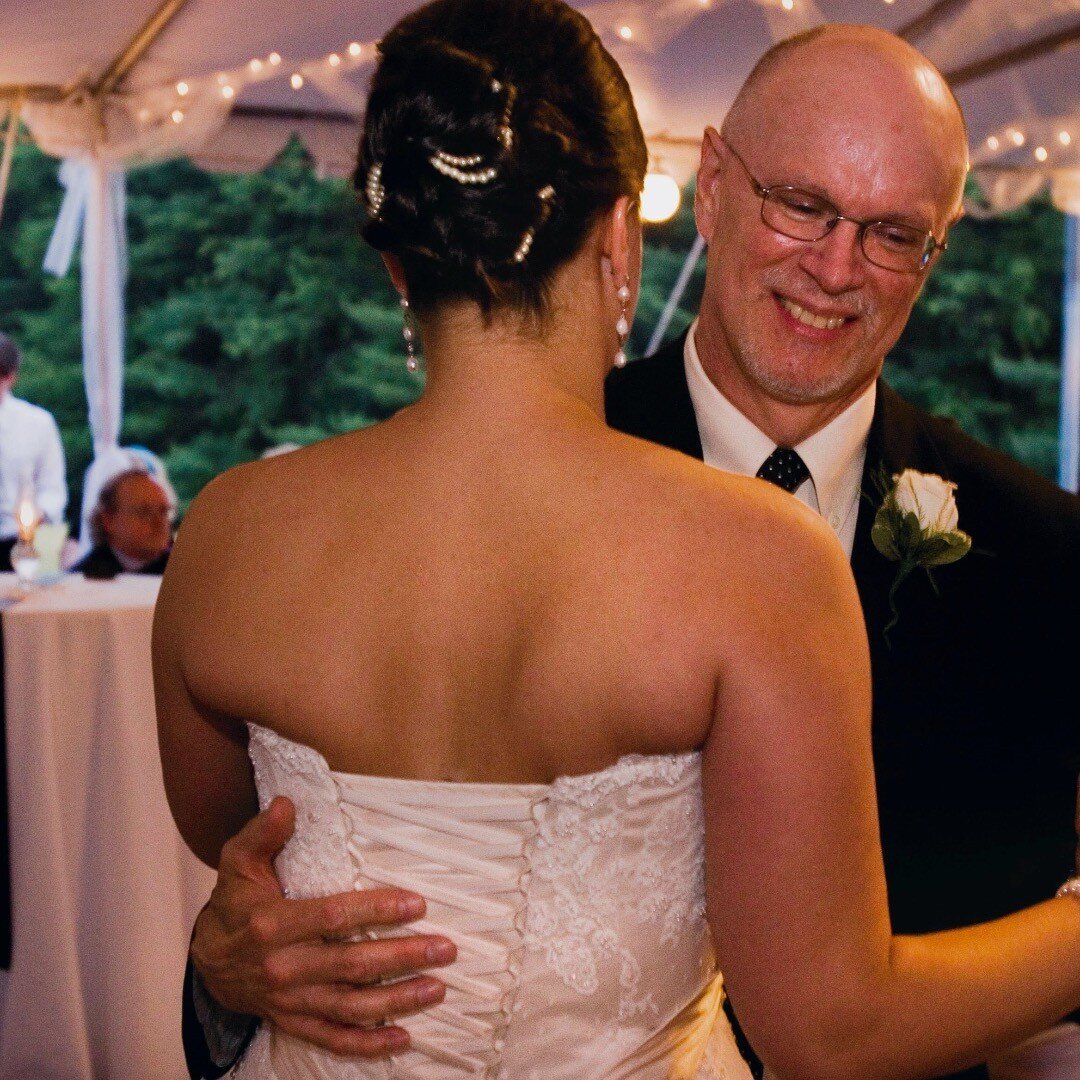
My wife’s grandmother, Maxine Burke Markam, passed away this weekend. Today is her funeral. She was smart, beautiful, tough, and the meanest canasta player I have ever seen. Here’s a picture of us cutting a rug at Mary’s and my wedding five years ago:

Death is never a terribly fun thing, but without it, I’m not sure life would seem quite so wonderful. All last week, I couldn’t help but remember two scenes from different plays. The first is Thorton Wilder’s Our Town in which Emily has passed away in childbirth, but has been given one last to look at her old life before disappearing to her grave:

EMILY: It goes so fast. We don’t have time to look at one another. [...] I didn’t realize. So all that was going on and we never noticed. Take me back — up the hill — to my grave. But first: Wait! One more look. Good-by, Good-by, world. Good-by Grover’s Corners. … Mama and Papa. Good-by to clocks ticking … and Mama’s sunflowers. And food and coffee. And new-ironed dresses and hot baths … and sleeping and waking up. Oh, earth, you’re too wonderful for anybody to realize you.

The second is Vladmir’s speech near the end of Waiting for Godot:

VLADMIR: Astride of a grave and a difficult birth. Down in the hole, lingeringly, the grave digger puts on the forceps. We have time to grow old. The air is full of our cries.

I would like to think that the gravedigger also enjoys coffee and new-ironed dresses.

Reading for Writers …

Since relocating to Pittsburgh, I’ve been invited to teach at the MFA program at Hogwarts Chatham University.  This is a thrill, as my students will be actual creative writers of Children’s Literature!  It will also be a challenge.

The educational needs of creative writers are slightly different from those of straight academics.  The questions/vocabulary/theories that serve scholarship aren’t necessarily the ones that help a writer become better at their craft.1 The goal of this course will be to combine the reading list of an English Lit class with the vocabulary of a creative writing workshop. 

I’ll be writing pieces on this blog about each of the books that we’ll be discussing in class.2 Here’s the first half of our reading list.  You’re welcome to follow along!

http://images.contentreserve.com/ImageType-100/0887-1/%7BC8172072-9801-444B-969C-8C50C4784297%7DImg100.jpgThe Wonderful Wizard of Oz by L Frank Baum (1900)

I’m not actually the biggest Baum fan.  His books often feel like rambling journeys where each chapter has no relation to the larger story.  The first book in his series, however, is a welcome exception.  Even better, Baum’s famous introduction to that book is a great way to start a course on the genre — it’s the Declaration of Independence of Children’s Literature.


http://www.davidmaybury.ie/journal/wp-content/uploads/2010/03/a6.jpgThe Secret Garden by Frances Hodgson Burnett (1911)

One of the recurring tropes in Children’s Literature is the creation of enchanted spaces — especially ones that are controlled by children.  What better example of this than a book that manages to create such spaces without needing to resort to magic?3


http://stevebetz.files.wordpress.com/2011/04/1556525273-huckleberry-finn-cover.jpgThe Adventures of Huckleberry Finn by Mark Twain (1885)

Now that last year’s Huck Finn debacle seems to have blown over, it seemed like it might be fun to explore this book — one of the rare children’s literature titles that has gained full acceptance in the larger canon.  From a writing perspective, it will also provide a chance to examine the quest narrative in greater detail.


http://www.thescop.com/wp-content/uploads/2011/01/peter-pan-peter-and-wendy-and-peter-pan-in-kensington-gardens-14683031.jpegPeter and Wendy by JM Barrie (1911)

My love of this book is well documented.


 http://www.thescop.com/wp-content/uploads/2011/03/charlottes-web-cover.gifCharlotte’s Web by EB White (1952)

I’m actually more of a Stuart Little guy myself, but with this book recently topping the School Library Journal’s list of Top 100 Children’s Books, I thought it would be worth looking at.  One of the things I love about Charlotte’s Web is how (seemingly) effortlessly it manages to combine prosaic American farm life and talking-animal magic — with Charlotte being the nexus between those two worlds.


  1. For more on this difference, you can check out my post on poetics vs hermeneutics
  2. Some readers will remember that I blogged through the Children’s Literature course I taught last year.
  3. My one regret is that I will not have space in the course to pair this book with its natural bookend: Bridge to Terebithia
Older posts